01
Pattern memory
A µPD650C-085 CPU scans the panel and reads or writes four 1K × 4-bit static CMOS RAM chips. A battery supply preserves the programmed data when the machine is switched off.
Roland TR-808 Service NotesRaygum research series · Publication 01
The TR-808 is a programmable drum machine Roland released in 1980. It lets a musician build repeating rhythms across 16 steps using 11 electronically synthesised drum voices.
It was designed as a practical demo tool, rejected by its first market, then adopted as raw material for entirely new forms of music. This is the story of how the box became a language.
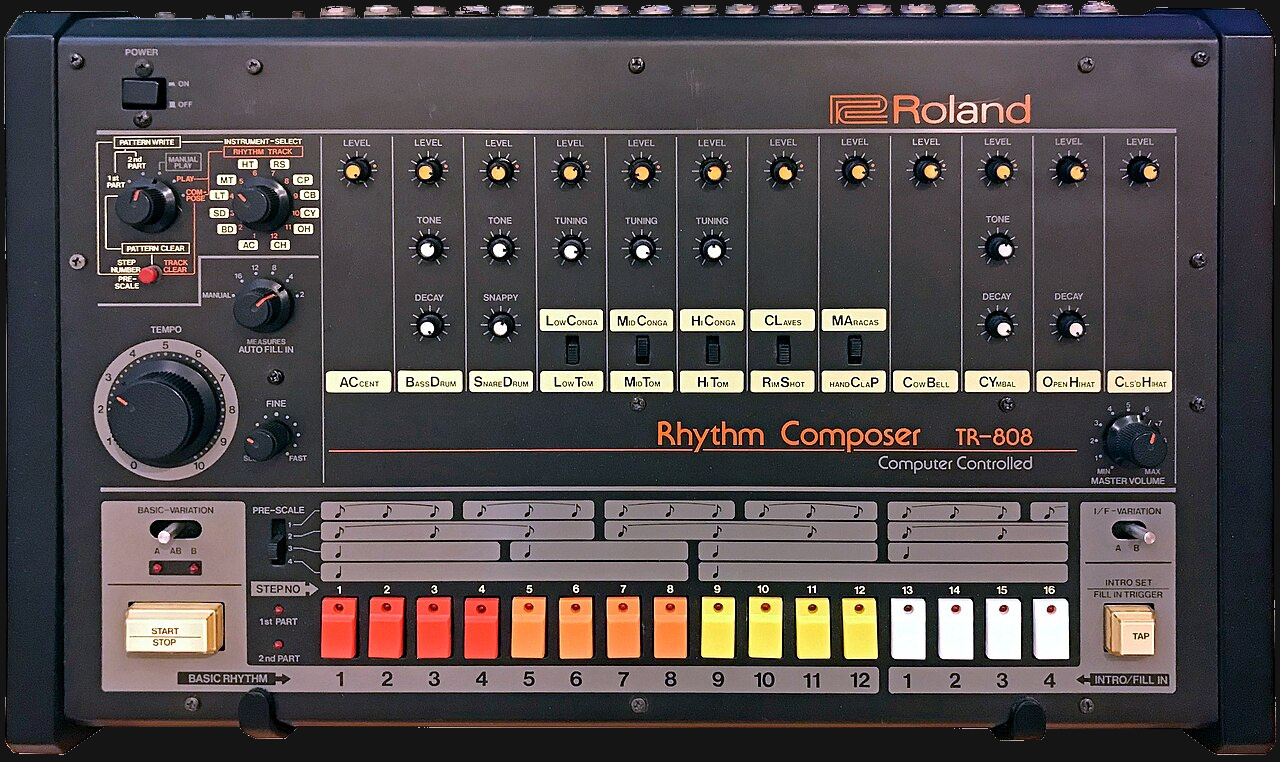 Rhythm Composer · 1980
Hear the basic idea
Press Start. Each lit pad is a moment in a looping bar; switch steps on or off to rewrite the rhythm.
No musical training required
16-step programmer
120 BPM · Stopped
Select a voice · program the squares · start the loop
Reading sequence · 5 movements
The story starts with the physical machine, follows the conditions that shaped it, then watches the sound travel beyond the original box.
Movement 01 · Meet the object
A drum machine replaces a drummer with a device that creates and repeats percussion patterns. On the TR-808, the 16 coloured buttons represent 16 moments in a bar of music. Choose a sound, light the moments when it should play, then let the bar loop.
The machine does not contain recordings of kick drums, snares or cymbals. Its circuits synthesise each hit when triggered, which is why an 808 sounds deliberately electronic rather than like a drummer in a room.
Open the instrument recordBass drum, snare, clap, cowbell or another sound.
Switch on any of the 16 moments in the bar.
Adjust tone, tuning, decay, level or accent.
Hear the pattern repeat, then change it in real time.
Object photograph: Roland TR-808 at the Musical Instrument Museum, Phoenix, by Bryan Pocius; cropped and perspective-corrected by Rudolfs Davis Strazds. Wikimedia Commons ↗
Signal lab · Eleven analogue voices
Sample memory was too expensive, so every hit is assembled by a small analogue synthesizer. Select a voice to see how a trigger becomes boom, snap, sizzle or clap.
Voice-family map
Where the machine's sounds tend to live
Conceptual spectrum
not measured
Front panel: tone + decay
A trigger excites a resonant analogue circuit. Its sine-like pitch drops quickly, then the body fades according to the decay control—the abstraction that lets the kick behave like bass.
Signal anatomy · illustrative emphasis
Audio is generated live by a circuit-inspired model. Traces show the shape of each idea, not measurements from a specific unit; component tolerances mean two original 808s need not be perfectly identical.
Movement 02 · Built from limits · Japan · 1978–82
Roland wanted a programmable rhythm partner for musicians making demos. Sample memory cost too much, so the team synthesised each drum instead. The limitation produced something stranger—and more flexible—than a recording of a real kit.
Tadao Kikumoto led the development team and Hiro Nakamura designed the analogue voice circuits. Ikutaro Kakehashi’s account supplies the famous ending: a selected transistor became part of the sound, then Roland could no longer buy it.
BRIEF
Roland asked a team led by Tadao Kikumoto to turn the CR-78 concept into a programmable rhythm machine for professional musicians making demos. Hiro Nakamura developed its analogue voice circuits.
Roland: the TR-808 storyCIRCUIT
Memory for sampled drums was too expensive, so the engineers synthesised each voice with analogue circuitry. The machine sounded unlike an acoustic kit because realism was beyond the affordable technology of the brief.
Roland: the TR-808 storyNOISE
Roland selected 2SC828-R transistors rejected from their normal specification because their particular behaviour suited the noise-generating circuit. “Faulty transistor” is the memorable shorthand, not the precise engineering description.
Roland: the TR-808 storyRUN
Roland reports an official 1980–82 production run of roughly 12,000 units. When the selected transistor supply disappeared, the original sound-generating design could not simply be put back into production.
Roland: the TR-808 storyOral history · In their own words
Its makers remember an inexpensive drum synthesizer. The musicians remember surprise, warmth, physical force and a box that behaved differently in every pair of hands.
“There’s nothing that compares to the original warmth of the 808.”
Roy Davis Jr.
On why samples did not replace the physical machine for him.
Quotations are excerpted from first-person interviews, authored reviews and the documentary 808. Open each source for the full account and its original context.
Technical file · service notes · 1981
The familiar description—an “all-analogue drum machine”—compresses two systems into one. A microprocessor stores and schedules the rhythm; analogue circuits turn its trigger pulses into sound.
Roland’s service notes expose both layers, along with the production changes normally hidden beneath the panel.
Control signal · one programmed hit
01 · Memory
Patterns stored
02 · CPU
1 ms trigger
03 · Voice circuit
Wave shaped
04 · Outputs
11 lanes
Stored and scheduledPattern data stay digital until the CPU sends a short common trigger.
Shaped and heardBeyond that boundary, resonators, noise and oscillators build the sound as voltage.
System A · digital control
A µPD650C-085 CPU scans the panel and reads or writes four 1K × 4-bit static CMOS RAM chips. A battery supply preserves the programmed data when the machine is switched off.
Roland TR-808 Service NotesThe computer emits an approximately 1 ms pulse to every voice gate. Instrument data decide which gates open; accent raises the shared trigger from roughly 4 V towards 14 V—narrowed to 7–14 V for the metallic voices—rather than storing a separate velocity for each drum.
Roland TR-808 Service NotesSystem B · analogue sound
The trigger reaches dedicated circuits that ring filters, shape transistor noise or filter a bank of rectangular-wave oscillators. “All analogue” accurately describes the sound generation, not the whole computer-controlled instrument.
Roland TR-808 Service NotesA Physically-Informed Model of the TR-808 Bass DrumThe TR-808 Cymbal: a Physically-Informed ModelThe sixteen named sounds occupy eleven selectable voice lanes. Five front-panel pairs share a lane and output—toms/congas, rim/claves and clap/maracas—so the two sounds in each pair cannot play simultaneously. The lanes feed eleven individual multi-output jacks as well as the internal mixer and master outputs.
Roland TR-808 Service NotesRoland TR-808 Operation ManualVoice architecture
The panel presents a kit. Electrically, it is a small family tree of resonators, noise paths and shared oscillators.
RING
The bass drum is not a stored sine wave. A short pulse excites a bridged-T band-pass network; a brief frequency jump, a second excitation and a feedback-controlled decay give the hit its attack and descending “sigh”. Its modelled centre frequency is about 49.5 Hz—sub-bass, not subsonic. Related ringing networks form the tom, conga, snare-tone, rim and claves bodies.
Roland TR-808 Service NotesA Physically-Informed Model of the TR-808 Bass DrumNOISE
Q35 is listed in Roland’s parts sheet as a 2SC828(R), “selected noise”. Its reverse-biased junction supplies white noise to the snare’s snappy layer, hand clap and maracas; filtering also creates the low tom’s short pink-noise tail. Roland specified a finished-unit calibration of 130 mV RMS at TP4. It is not the source of the cymbal or hi-hats.
Roland TR-808 Service NotesMETAL
Cowbell, cymbal and both hi-hats share six rectangular-wave oscillators made with one HD14584 hex Schmitt-trigger chip. Different filters, envelopes and VCAs turn the same inharmonic bank into four distinct metallic voices.
Roland TR-808 Service NotesThe TR-808 Cymbal: a Physically-Informed ModelCLAP
Band-passed white noise enters two parallel amplitude paths. A repeating sawtooth-shaped envelope supplies the clustered claps while a second, slower envelope creates the reverberant tail—an acoustic gesture assembled from control voltages.
Roland TR-808 Service NotesProduction file
CHASSIS
Roland’s exploded service drawing separates the machine into main, voicing, switch, jack A, jack B and power-supply board assemblies, joined by a flexible PCB and mounted beneath a steel top panel. The sound circuitry could be serviced as a distinct voicing board rather than a sealed module.
Roland TR-808 Service NotesMARKET
The parts list specifies separate 100 V, 117 V and 220/240 V power switches and transformers, plus supply-board variants for 100/117 V and 220/240 V markets. A museum-held 220 V example is rated at 8 W.
Roland TR-808 Service NotesThe Henry Ford: TR-808, 1981ORIGIN
The rear plate of the Henry Ford’s 1981 example reads “Made in Japan”. Roland’s chronology confirms that it operated factories in Hamamatsu during this period, but the sources audited here do not identify which plant assembled the TR-808. Naming a specific factory would go beyond the evidence.
The Henry Ford: TR-808, 1981Roland corporate historyREVISION
The service notes list serial-numbered changes for clock calibration, board clearance, clap level, noise-generator offset, trigger stability, memory protection and LEDs. They also say some earlier machines received modifications at the factory. Later circuit analysis notes ±20% capacitors and ±5% resistors in the voice circuits, another reason two originals need not be electrically identical.
Roland TR-808 Service NotesA Physically-Informed Model of the TR-808 Bass Drum| Serial | Area | Factory change |
|---|---|---|
| Serial000300 | AreaClock & cowbell | Factory changeAdjusted interrupt-clock capacitance and widened the internal cowbell tuning range. |
| Serial010500 / 051850 | AreaBoard clearance | Factory changeChanged Q1–Q4, then Q5–Q8, to shorter transistor packages so their tops cleared the switch board. |
| Serial010600 | AreaAudio & control | Factory changeReduced clap gain; revised battery drain, DIN input rejection, the noise-generator offset, voice-gate drive and common-trigger filtering. |
| Serial020800 | AreaPattern memory | Factory changeAdded switching around start/stop and CPU lines to prevent memory disturbance during power cycling. |
| Serial031100 | AreaStep display | Factory changeSubstituted lower-sensitivity red LEDs to prevent unintended illumination from driver-transistor base current. |
Roland notes that some earlier machines were modified at the factory before these thresholds. A serial number identifies a likely revision state, not an untouched circuit—and the threshold is not a count of units manufactured.
Production audit
Roland’s dedicated history gives a two-year production span and a run of around 12,000 machines. It is the clearest manufacturer account of the total, but not Roland’s only published date range.
Roland: The TR-808 StoryA separate Roland support record labels the model 1981–83, and a February 1983 Roland catalogue still offered the TR-808 at ¥150,000. The catalogue may record inventory sell-through; the July 1983 service-notes printing proves continuing support, not assembly. No factory ledger found in this audit identifies the last chassis date.
Roland TR-808 technical specificationsRoland Keyboard Catalogue, Vol. 5Roland TR-808 Service NotesRoland’s 1981 parts list verifies that Q35 was a selected-noise 2SC828(R). The later company account says out-of-specification parts were bought deliberately and that their exhaustion helped end production. The service document does not itself record that purchasing history.
Roland TR-808 Service NotesRoland: The TR-808 StoryOne repairer reports finding paint-marked 2SC536 and 2SC945 parts apparently installed as original noise transistors in two machines. It is useful evidence of possible late substitution, but the author labels the listening tests preliminary; it cannot establish how common the change was.
TR-808 noise transistor updateTechnical source register
The turn
The qualities that made the 808 a poor imitation of a drummer made it an extraordinary instrument.
Movement 03 · Rejected, then rescued · 1980—2025
The price followed the culture in reverse: first expensive, then unwanted, then scarce. These are sourced snapshots—not an annual index—so the broken line marks the evidence gaps as clearly as the values.
Selected market snapshot
Swipe to trace later years →
US list price
1980
Expensive, even before the myth
Roland positioned the new Rhythm Composer below the Linn LM-1, but $1,195 still made it a professional purchase rather than a casual experiment.
Manufacturer list price; not a used-market sale.
Roland: TR-808 Drum Machine FlashbackNominal fall from the 1980 list price to the reported mid-’80s floor.
The 2022 Reverb average compared with the reported $100 trough.
The 1980 list price in 2025 dollars—above the 2025 guide range.
Prices are nominal US dollars unless the 2025-dollar view is selected. Inflation conversions use annual CPI-U averages and are rounded to the nearest $10. Floors, appraisals, guide ranges and sales averages describe different evidence; they are labelled rather than treated as equivalent.
Movement 03 · Rejected, then rescued
Cheap enough to reach new hands. Flexible enough to survive the studio.
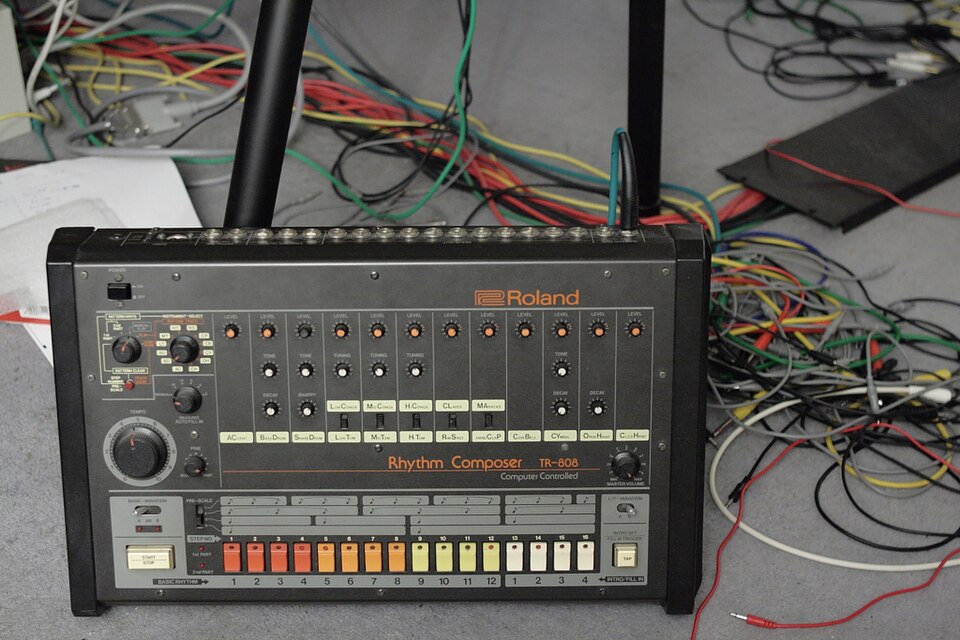
As used prices fell, musicians outside the machine’s intended market could get hold of one. Eleven separate outputs let them record, distort, reverse, gate, layer and tune every part of the beat. Commercial failure became creative access.
Photograph by fr4dd, Drøn studio, 2009.
Movement 04 · Beyond the box
The physical machine appears on early records. Soon its sounds are sampled, reversed and layered. Later, software and new hardware recreate its behaviour. Eventually “808” becomes a loose name for a kind of low-end weight.
All of those meanings belong to the history, but they are not the same claim. The chronology below keeps the signal paths separate.
A physical Roland TR-808 is named in a first-person account or release credit.
A documented hardware performance was captured, reversed, layered or replayed.
An 808-derived recording or PCM source appears without the original machine in the room.
A clone, recreation or software workflow is explicitly identified by the producer.
Movement 04 · Source register · 5 chapters
The short history and the release evidence now share one chronology. Scan the chapters, then open a record when you want its sources, voices and boundaries.
36 of 36 findings shown
Findings stay compact until you open their evidence files.
Signal type
Chapter 01
1980—82
Roland launches the TR-808 in 1980. Within two years, Yellow Magic Orchestra, soul and electro prove the same circuitry can sound precise, intimate and physically enormous.
Roland on YMO and the 808 revolution
Roland documents the TR-808 as a crucial part of the BGM sessions after YMO had demonstrated the machine live in 1980.
Boundary: The earliest unit was a pre-production machine; the evidence does not assign the 808 to every track.
Afrika Bambaataa & Soulsonic Force
single · Electro / hip-hop
Afrika Bambaataa describes the TR-808 as the source of the extra low-end weight that the production team built into Planet Rock.
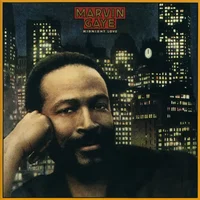
Recording engineer Mike Butcher recalls Gaye arriving with songs programmed on the TR-808; the first Sexual Healing demo was built from the machine.
“The first time I heard the song it was literally just the TR-808, which had been programmed already.”
Mike Butcher
On hearing the first demo of “Sexual Healing”.
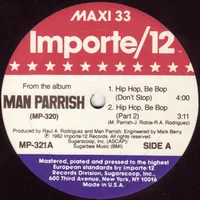
Man Parrish says he built the experimental track around a TR-808 because he wanted a synthetic drummer rather than realistic drum sounds.
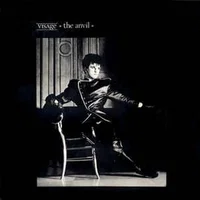
Visage drummer Rusty Egan directly identifies the TR-808 as part of The Anvil sessions.
Boundary: Egan separately corrects common drum-machine claims about earlier Visage recordings.
“It must have been 1982 because we’d used the 808 on The Anvil album.”
Rusty Egan
On bringing the same machine into his Camden Palace DJ booth.
Chapter 02
1983—88
Production ends just as the records multiply. Falling used prices move the machine through hip-hop, electro, R&B, pop and rock: no longer a product story, but a scene-to-scene exchange.
Smithsonian history of the TR-808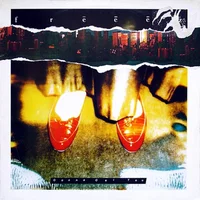
Arthur Baker and John Rocca describe Everton McCalla programming the I.O.U. beat on a TR-808 during the album sessions.
Boundary: The evidence is track-specific rather than an album-wide credit.
“The 808 didn’t have an organic sound, it had an 808 sound.”
Arthur Baker
On choosing the machine for the Freeez sessions.
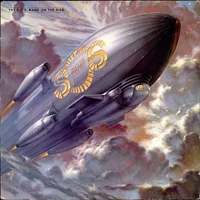
Jimmy Jam says he and Terry Lewis deliberately moved from the Linn sound to the TR-808 for Just Be Good to Me.
Boundary: The source proves named tracks, not every song on the album.
“And so that started for us with the drum machine. Let’s start with a whole different sonic and then build from there.”
Jimmy Jam
On deliberately leaving the Linn sound behind for The S.O.S. Band.
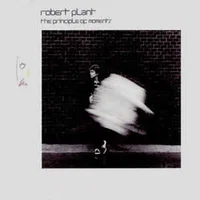
Plant and co-writer Jezz Woodroffe both describe building the Big Log pattern on a TR-808.
Boundary: The evidence is track-specific.
“So we turned on a TR-808 drum machine – what would we do without the hand claps on the TR-808?”
Robert Plant
On softening the arrangement that became “Big Log”.
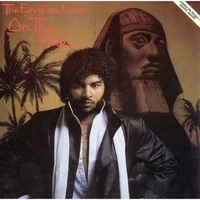
Gregory Broussard describes buying a TR-808 and using it to record Egypt, Egypt.
Boundary: The source is strongest for the featured track.
“I still have the one I made Egypt Egypt with.”
Egyptian Lover
On preserving the TR-808 used to make “Egypt Egypt”.
Steve Standard describes tuning the TR-808 toms, adding snare snap and widening the kick decay while shaping Set It Off.
Boundary: The original release currently has no artwork in the Raygum archive.

T La Rock identifies Rick Rubin’s beat as a Roland TR-808 production; Rubin says it was their only drum machine and recalls spreading the kick across six multitrack channels.
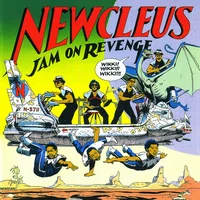
Roland reconstructs Cozmo D's production and identifies the TR-808 as the source of the percussion on Jam On It.
Boundary: The evidence is track-specific.

Hardcastle recalls hiring a TR-808 and recording patterns later used for 19 and Rain Forest.
Boundary: The evidence identifies two tracks rather than the entire album.
“I just put beats down [to tape] because I knew that we had to take the machine back. I did four or five.”
Paul Hardcastle
On the hired TR-808 patterns that fed “Rain Forest” and “19”.
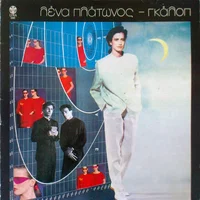
The official reissue notes describe Gallop as an analogue production that prominently features the TR-808.
Boundary: The release-level evidence does not allocate the machine track by track.

Mike Diamond explains that Adam Yauch programmed the TR-808, recorded it to tape, reversed the tape and returned it to multitrack.
Boundary: Original hardware was used, but the heard pattern is a tape transformation.
“Yauch recorded this beat, bounced it to another tape, flipped it around—this is pre-digital sampling—and bounced it back to the multi-track tape.”
Mike Diamond
On Adam Yauch constructing the reversed rhythm for “Paul Revere”.
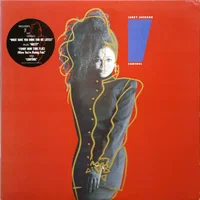
Jimmy Jam and Terry Lewis describe synchronising a TR-808 with the existing LinnDrum rhythm on When I Think of You.
Boundary: The result is a LinnDrum/808 hybrid and the 808 is especially prominent in the video version.
“Nothing had that 808 swing, the way it moves is different than all the other drum machines.”
Terry Lewis
On the machine used alongside the LinnDrum for “When I Think of You”.

Release credits list the TR-808, with the most specific attribution placing Michel Geiss on the machine for Fourth Rendez-Vous.
Boundary: The track-level credit is more precise than a whole-album claim.
David Noller describes combining TR-808 and TR-909 kicks in an Emulator II, then pitching the hybrid from an SP-1200.
Boundary: This is a sampled hybrid, not an untouched TR-808 performance.
“…a custom kick sound made by marrying the TR-808 and the TR-909 in an EMU Emulator II.”
David Noller
On building the kick for “Just Give the DJ a Break”.

Graham Massey recalls the machine at the centre of the early group; a contemporary equipment list names the TR-808 in the Newbuild setup.
Boundary: The sessions also used a TR-909.
“…the TR-808 as the main engine to drive the sequencers…”
Graham Massey
On the machine at the centre of the group’s early setup.

Gerald Simpson places the TR-808 in the writing setup while explaining how Voodoo Ray was built alongside the SH-101.
Boundary: The claim is tied to the track and its direct production context.
“I had a TR-808 with no manual, just got it from the shop.”
Gerald Simpson
On the coupled machines used in his early writing process.

Public Enemy
album · Hip-hop · Bring the Noise
Hank Shocklee says he sampled the enlarged 808 sound from Original Concept’s Knowledge Me and reused that recording on Bring the Noise, Rebel Without a Pause and other productions.
Boundary: The Bomb Squad transferred an 808-derived sound from another record; this does not establish an original TR-808 in the Public Enemy sessions.
Chapter 03
1992—2009
PCM cards, samplers and studio processing detach the voices from the original chassis. Hardware, captured hardware and 808-derived sources now coexist, so the signal path matters more than the name.
MusicRadar on Aphex Twin’s sampled workflow
Production research identifies Roland R-8 PCM sounds from its 808 expansion card, not an original TR-808.
Boundary: A deliberate counterexample: recognisable lineage without original hardware.
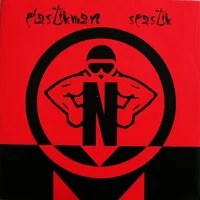
Richie Hawtin recalls switching on his TR-808 after a night in Detroit and constructing Spastik as an intense rhythmic piece from that one machine.
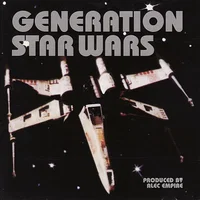
The artist's release notes list the TR-808 among the instruments used on the album.
Boundary: An Akai sampler was also part of the sessions.
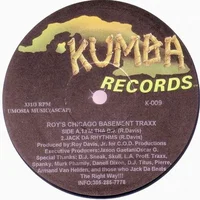
Davis directly identifies the TR-808 as part of the original Basement Traxx sessions.
“There’s nothing that compares to the original warmth of the 808.”
Roy Davis Jr.
On why samples did not replace the physical machine for him.
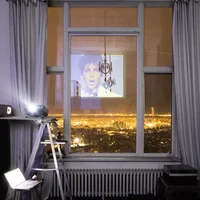
Jori Hulkkonen recalls making the track with Tiga’s TR-808, his Juno and a rented MPC, recording the almost entirely 808 arrangement raw to DAT.

Edgar names the TR-808 in the compact hardware setup used to make Color Strip.
“That album was created with an Arp, Matrix 1000, TR-808, Moog Voyager, MS-10.”
Jimmy Edgar
On the compact setup behind Color Strip.
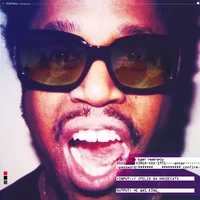
Felix da Housecat identifies the TR-808 as the sole sound source for Kickdrum and describes processing it through filters and effects.
Boundary: The evidence is track-specific rather than album-wide.
Chapter 04
2011—16
Surviving originals sit beside sampling, extreme transformations and software recreations. “808” increasingly describes a family resemblance; the evidence still has to identify the actual method.

Antony Williams identifies Work It as one of the first tracks made with his hardware TR-808.
Boundary: He explicitly says earlier Addison Groove material used samples instead.
“…with my hardware 808…”
Addison Groove
On the point where hardware replaced samples in his process.
John Elliott says a TR-808 supplied many of the album's deliberately minimal drum parts.
“I used a Roland TR-808 and limited myself to using only the snare drum, bass drum and hi-hat sounds.”
John Elliott
On arranging the deliberately minimal drum parts for the album.
REENO
album · Electro
The artist's release notes state that every sound came from a physical Roland TR-808 without samples.
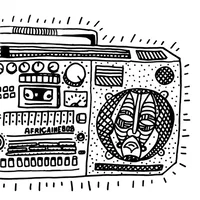
The duo trace the project's formation to Dirk Leyers acquiring a physical TR-808; the interview centres on making Basar.
Boundary: The source does not allocate the machine track by track.
“And that’s how the 808 became the third band member for us.”
Dirk Leyers
On the borrowed machine that gave Africaine 808 its identity.
Chapter 05
2017—NOW
Roland formalises the lineage with official hardware and software recreations while the original remains active. “808” can now mean machine, sample, clone or tuned sub-bass; the records below keep those claims apart.
Roland at 45 years of the 808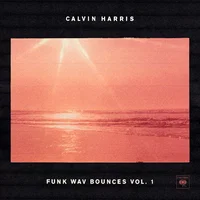
Detailed release credits identify Calvin Harris with a Roland TR-808 on Slide.
Boundary: The published finding is restricted to the credited track.
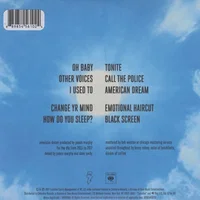
Track and album credits identify James Murphy programming a Roland TR-808 on Oh Baby.
Boundary: The exact track relation does not establish whole-album use.
François X
album · Techno
François X describes a hybrid process built from resampled 808 libraries, TR-8 emulation and further sampling.
Boundary: This is explicitly not an original-hardware credit.
“…this album was mainly 808 samples and sometimes I sampled the structure of the drums and put some Goldbaby stuff on top.”
François X
On the hybrid sample and emulation workflow behind Irregular Passion.
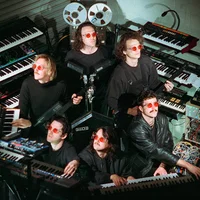
King Gizzard & the Lizard Wizard
album · Electronic rock
The band's official credits assign a Roland TR-808 to Stu Mackenzie while separately listing a TR-8, preventing a model mix-up.
Movement 05 · Open evidence
Memory turns instruments into myths. This monograph keeps the original documents, exact claims and unresolved gaps visible so a better source can change the story later.
Primary document · 40 pages
Its language is practical rather than prophetic: select an instrument, place it on a step, adjust the voice, repeat. That original workflow is the baseline for every later reinvention in this monograph.
Open on Internet ArchiveBasic rhythm programming
Scan and reader hosted by the Internet Archive. Full-screen and page controls are available inside the reader.
Citation record
Reference this work
Recommended citation
Raygum (2026). The Roland TR-808 Monograph (RG 01, Version 0.7). https://raygum.com/research/roland-tr-808-monograph
Publication description
The Roland TR-808 is a source-critical digital monograph from Raygum tracing how the drum machine moved through recorded music and the used market, preserving attributed first-person quotations and historic price benchmarks while keeping hardware, sampled-hardware, sample and emulation claims distinct.
Raygum’s original research compilation is available under Creative Commons Attribution 4.0 International. Third-party source material remains subject to its original terms.
Open notebook
Version 0.7 · Updated 2026-07-25
First-person testimony, an official release credit, or multiple independent sources that identify the exact model.
A reputable manufacturer, academic or production source with a specific release-level claim, published with its limitation.
We do not publish a claim as verified because a bass is called an “808,” because a gear list names a related Roland model, or because an unsourced list repeats it. Album entries based on one documented track say so.
Found a stronger source or a mistake? Send a correction. The source register is designed to change when the evidence does.