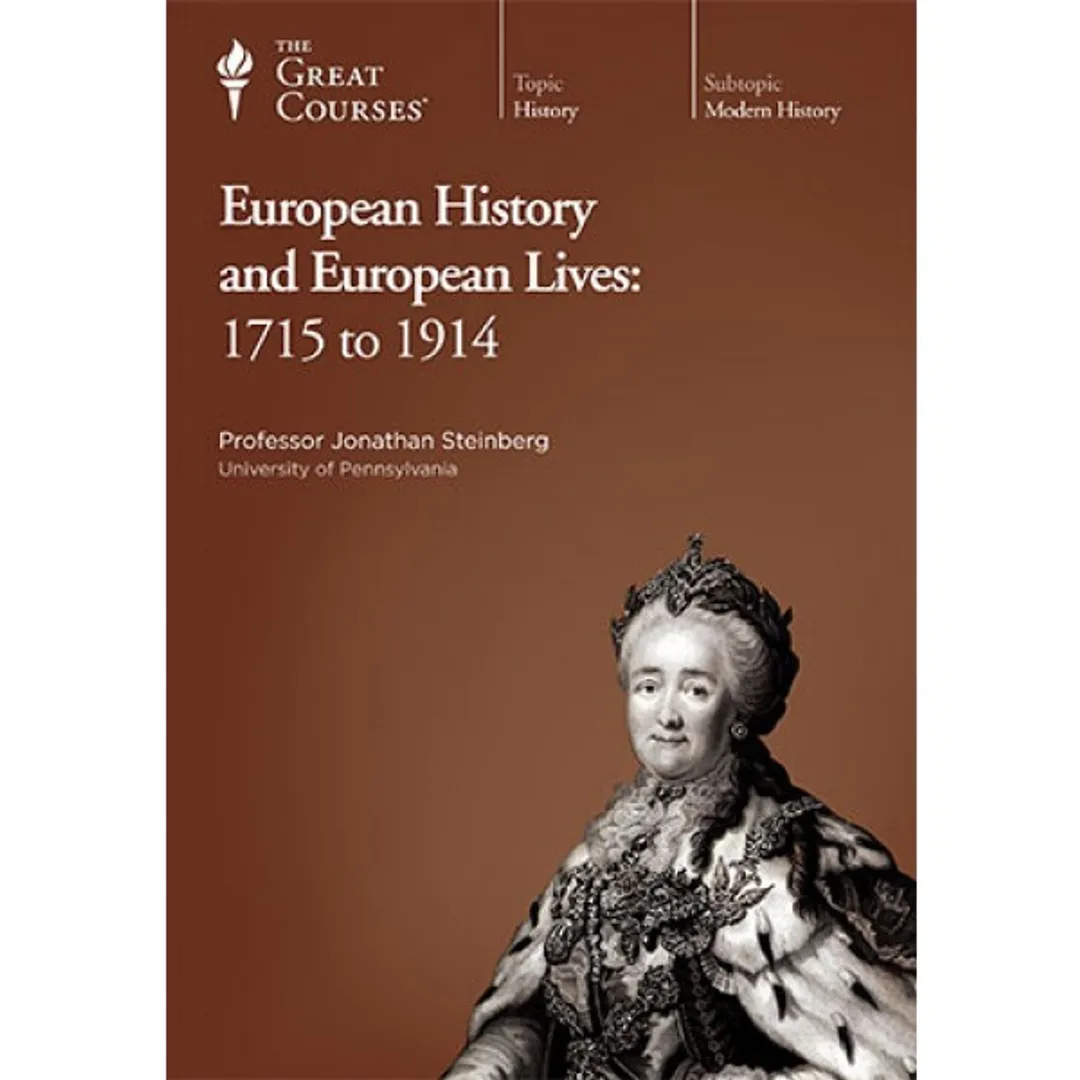
1.
History as a "Soft" Science
2.
Augustus the Strong — Princely Consumption
3.
Robert Walpole — Politics of Corruption
4.
Frederick the Great — Absolute Absolutist
5.
Jean-Jacques Rousseau — a Modern Self
6.
Samuel Johnson — The "Harmless Drudge"
7.
Maria Theresa — Mother of the Empire
8.
David Hume — The Cheerful Skeptic
9.
C.P.E. Bach — Selling the Arts
10.
Catherine the Great — Russian Reformer
11.
Joseph II — The Rational Emperor
12.
Goethe — The Artist as Work of Art
13.
Adam Smith — The Wealth of Nations
14.
Marie Antoinette — Queen Beheaded
15.
Edmund Burke — The New Conservatism
16.
Robespierre — The Democrat as Terrorist
17.
Mary Wollstonecraft — The Rights of Women
18.
Napoleon — The Revolutionary Emperor
19.
Metternich — The Spider and the Web
20.
N.M. Rothschild — Financier to the World
21.
Goya — The Painter as Social Critic
22.
Giuseppe Mazzini — Idealist of the Nation
23.
George Eliot — a Scandalous Woman
24.
The Irish Starve — The Great Famine
25.
Napoleon III — The Empire of the Boulevards
26.
Pius IX — The Infallible Pope
27.
Richard Wagner — Revolution in Music
28.
Marx and Engels — The Perfect Collaboration
29.
Otto Von Bismarck — Blood and Iron
30.
Charles Darwin — Origin of Species
31.
Queen Victoria — "We Are Not Amused"
32.
Friedrich Krupp — The New Plutocracy
33.
Louis Pasteur — Modern Laboratory Science
34.
Count Leo Tolstoy — Lord and Serf
35.
Alfred Dreyfus — First Act in the Holocaust
36.
David Lloyd George — Champion of the Poor