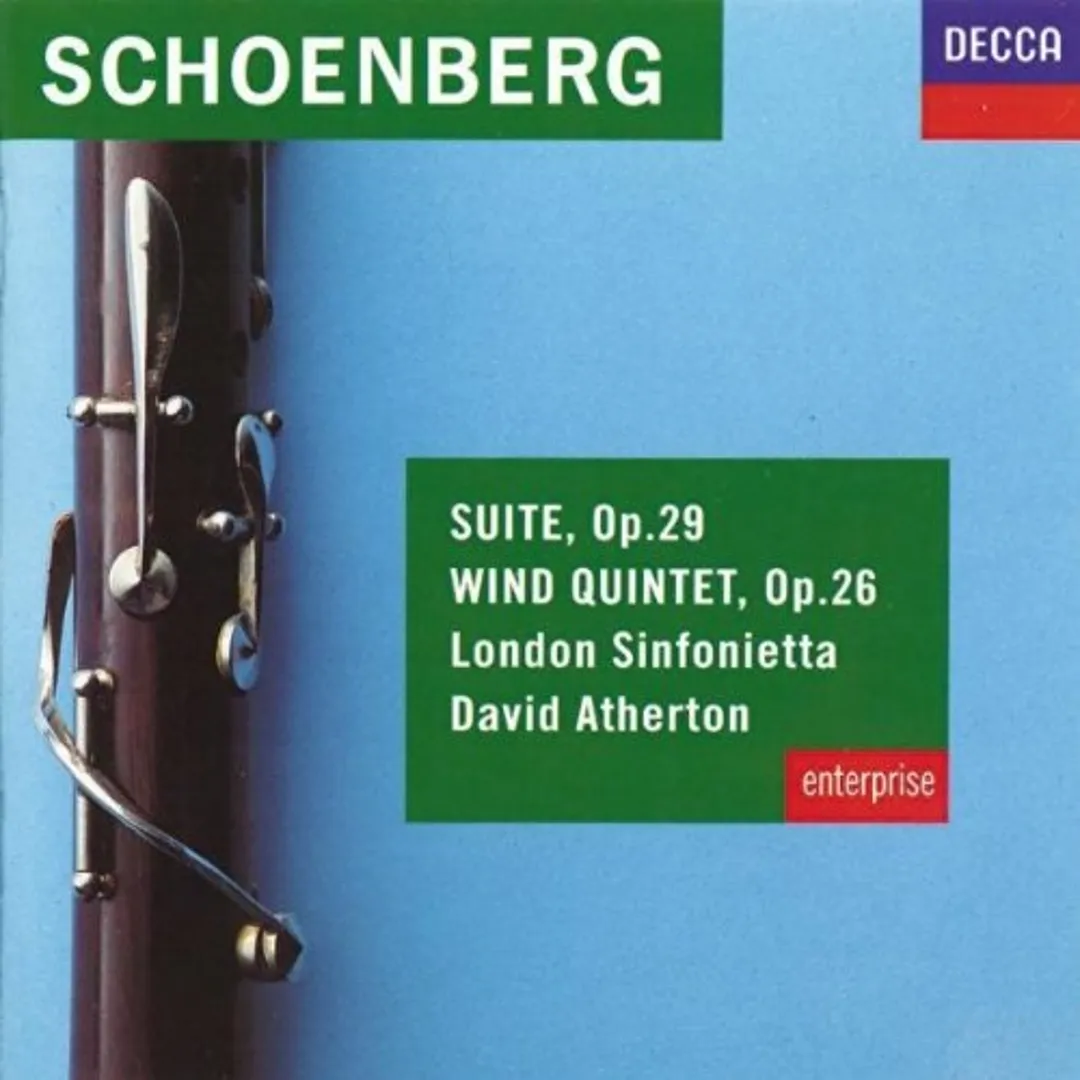
The Suite, Op. 29, is a chamber work composed by Arnold Schoenberg between 1925 and 1926 for a septet consisting of piano, piccolo clarinet, clarinet, bass clarinet, violin, viola, and cello. This piece exemplifies Schoenberg's twelve-tone technique, structured in four movements—Ouverture, Tanzschritte, Thema mit Variationen, and Gigue—reflecting his innovative approach to form and harmony.
The Wind Quintet, Op. 26, composed in 1923–24, is one of Schoenberg's earliest works employing the twelve-tone method, written for flute, oboe, clarinet, horn, and bassoon. Structured in four movements—Schwungvoll, Anmutig und heiter; Scherzando, Etwas langsam, and Rondo—the quintet showcases Schoenberg's application of serialism within traditional chamber music forms.
Both compositions are significant in Schoenberg's oeuvre, marking his transition into twelve-tone composition and influencing subsequent developments in 20th-century music.